The Athletic Evolution of Yoga: Why Cross-Training with Infrared Isometrics Changes Everything
February 22, 2026
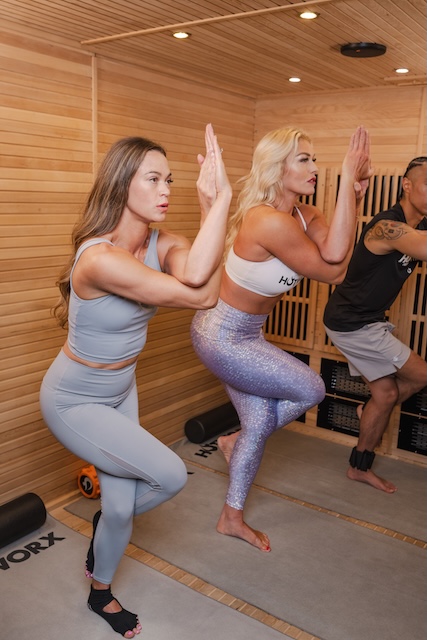
My first yoga session was humbling.
Coming from a background of football training and bodybuilding, I thought I understood intensity. I was accustomed to heavy weight, explosive power, and pushing through physical limits. I did not expect my first attempt at hot yoga to challenge me the way it did. But it did. It exposed weaknesses in flexibility, balance, muscular endurance, and mental focus that traditional weight training had never forced me to confront. I walked out of that room enlightened—and determined to get better at yoga.
At the time, I was looking for a way to cross-train to improve my strength and skill for snow skiing. I needed something that would complement dynamic resistance training, not replace it. That first Bikram class was ninety minutes of structured, disciplined, isometric work in intense heat. It was demanding and precise, and in many ways it reminded me of football conditioning. I later learned that I had chosen one of the most rigorous forms of yoga available. The results were undeniable. I felt stronger, more mobile, and more focused. But ninety minutes is a serious time commitment for a busy professional. That realization would eventually shape how I viewed the evolution of yoga in modern fitness.
The days of walking into the gym, doing bench press and curls, and calling it a complete workout are long gone. Modern fitness still requires consistency, but with specialized training and intentional variety of workout types. Champion athletes never allow themselves to plateau by staying locked into one routine. Cross-training is a foundational principle of elite performance. As Runner’s World has defined it, cross-training builds strength and flexibility in muscles your primary sport does not utilize, corrects imbalances, prevents injury, and prevents burnout. In short, it creates a more complete athlete.
Look at the evidence…
The Seattle Seahawks reportedly incorporated mandatory yoga sessions as part of their preparation for their Super Bowl championship run. Aaron Rodgers has credited stretching and yoga with helping sustain his legs and athleticism. Olympic snowboarder Jamie Anderson has spoken about yoga giving her a “ninja-like edge,” helping her land better and crash better. These are not fringe athletes experimenting with trends. These are champions seeking every possible performance advantage.
Yoga has shifted from being viewed primarily as therapy to being embraced as straight-up exercise. The modern fitness consumer wants more than old-school aerobics and casual stretching. They want measurable results. They want strength, endurance, calorie burn, fat burn, and efficiency. This is where athletic-style yoga separates itself from traditional formats. Athletic yoga emphasizes isometric holds—sustained muscular contractions under tension that build strength and increase metabolic demand. The focus shifts from stylistic transitions to muscular engagement. It becomes less about simply moving through poses and more about owning the position with strength and control.
Another standout example of a current professional athlete integrating yoga into elite performance training is Lindsey Jacobellis, the Olympic gold medalist in snowboard cross. Jacobellis, who captured multiple medals for Team USA at the Beijing 2022 Winter Olympics, attributes part of her athletic longevity and consistency to incorporating yoga into her weekly training. At 36 years old—an age when many athletes begin to decline—she found that even short yoga sessions help with joint mobility, mental focus, and recovery, giving her an edge when racing at high speeds and navigating unpredictable courses. Jacobellis uses yoga not just for flexibility, but as a performance tool that enhances awareness, steadiness, and resilience—key attributes for a sport where balance and sharp reflexes can make the difference between winning and crashing.
How about Satou Sabally, forward for the Dallas Wings, a WNBA athlete who explicitly incorporates yoga into her athletic conditioning? Sabally uses both yoga and Pilates regularly as part of her strength and mobility training, noting that these practices help her activate smaller muscle groups, improve flexibility, and better balance the physical demands of basketball with recovery and injury prevention. She explains that integrating yoga into her routine has been instrumental in helping her stay healthy and perform consistently at a high level, especially amid the rigors of a long WNBA season.
HOTWORX® Hot Yoga was created to meet the demands of this new fitness reality. The 30-minute infrared yoga sessions, paired with 15-minute high-intensity interval training options, offer an efficient and structured cross-training system for runners, weight trainers, skiers, climbers, and everyday professionals and fitness seekers who want more workout in less time. Instead of ninety minutes in an old school convection heated room, clients receive a concentrated, athletic isometric session designed for real-world performance in a highly breathable, almost zero humidity infrared environment..
The addition of infrared energy and heat changes the equation even further. Infrared energy penetrates deeply into muscle tissue, supporting circulation and allowing muscles to process metabolic by-products more efficiently. Heat acclimation stimulates heat shock protein production, supporting cellular resilience and recovery. The result is not just flexibility training, but a full-body strength and endurance session in a controlled, performance-driven environment. Clients are not passively stretching; they are training.
Structure is another key element. Small-group sessions of up to three participants, led by virtual instructors, ensure consistent pacing, proper sequencing, and built-in accountability. The delivery is disciplined and repeatable. Clients are encouraged to challenge themselves while working at their own level. It feels more like performance training than a traditional yoga class. Athletic, intentional, and results-oriented.
Athletes and general fitness members alike use yoga as a tool to elevate performance and improve quality of life. But when yoga is approached with an athletic mindset and enhanced with infrared technology, it becomes something more. It becomes a strength-building, calorie-torching, injury-preventing system that supports the mind-body connection while driving measurable physical gains.
That first yoga session humbled me. It forced me to recognize that strength without flexibility is incomplete and that power without balance is limited. Cross-training with athletic infrared isometrics is not optional for those who want to elevate beyond average. It is a performance multiplier.
Yoga has evolved. The question is whether your training has evolved with it.
👊🔥
SHARE THIS POST

Stephen P. Smith, MA
CEO and Creator of HOTWORX, Author, Former National Collegiate Bodybuilding Champion and Arena Football Player, Certified Professional Trainer
GET THE LATEST HOTWORX BLOGS SENT RIGHT TO YOUR INBOX!
Sign up to receive weekly emails:
Thank you!